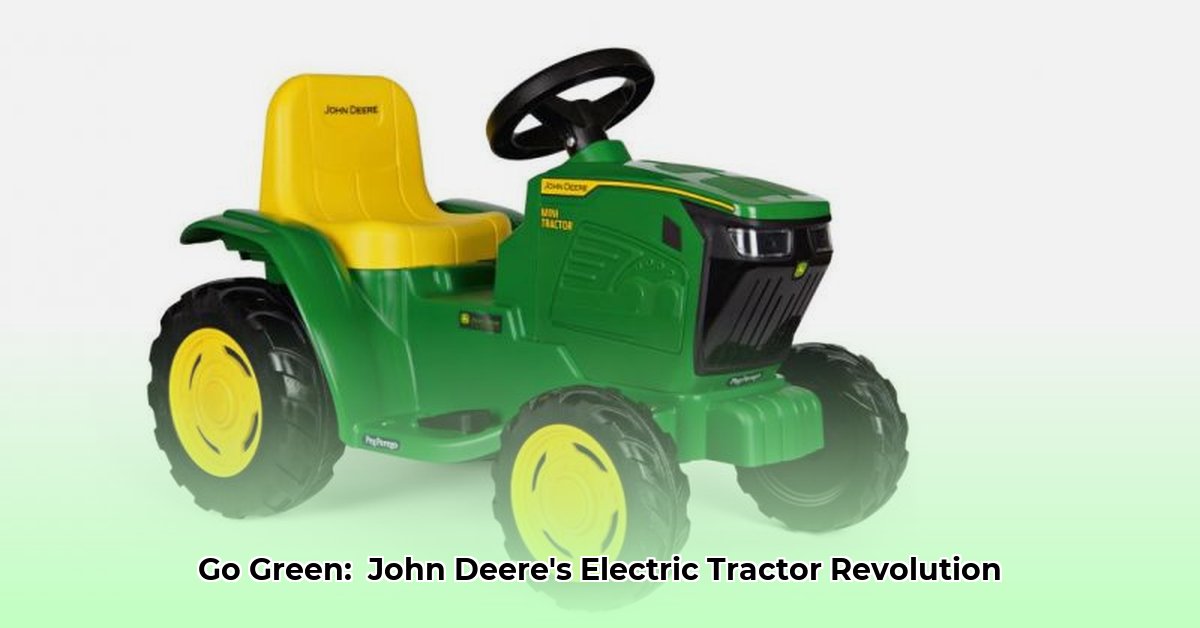
Powering a Greener Future: An In-Depth Analysis of John Deere's Battery Tractor Technology
John Deere's foray into electric tractors marks a significant shift in the agricultural landscape, promising a cleaner, quieter, and potentially more sustainable approach to farming. However, the true environmental impact of these battery-powered machines is complex and requires a nuanced examination beyond simply comparing them to their diesel counterparts. This article delves into the technical aspects of John Deere's battery technology, analyzes its sustainability implications, and offers actionable recommendations for stakeholders to accelerate the transition towards truly sustainable agriculture. For more details on John Deere's tractor models, see this helpful overview.
The Power and Performance Equation: Electric Tractors in the Field
John Deere's electric tractors offer comparable, and in some cases superior, power output to their diesel equivalents. They boast impressive performance even under demanding conditions, minimizing downtime and maximizing operational efficiency for farmers. Beyond raw power, these tractors provide a smoother, quieter operation, enhancing operator comfort and reducing noise pollution for both neighbors and wildlife. Furthermore, advanced features like GPS-guided steering and automated functions enhance efficiency and potentially reduce overall energy consumption. However, the high initial purchase price compared to traditional diesel models requires a careful consideration of long-term cost savings, including reduced fuel and maintenance expenses, as well as potential government incentives. How can farmers effectively assess the total cost of ownership to justify the upfront investment?
The Environmental Footprint: A Holistic Perspective
While electric tractors eliminate tailpipe emissions during operation, a comprehensive lifecycle assessment (LCA) is crucial for evaluating their true environmental impact. The energy-intensive manufacturing of batteries, the sourcing of raw materials, and the ultimate disposal of spent batteries significantly influence the overall carbon footprint. This requires a holistic analysis that considers the 'cradle-to-grave' environmental consequences. Furthermore, the source of electricity used to charge these tractors is paramount; reliance on renewable sources like solar or wind is essential for minimizing the overall environmental impact. What are the key challenges in ensuring access to renewable energy for charging infrastructure in rural farming communities?
Sustainability Check: Advantages and Disadvantages
A balanced assessment of John Deere's electric tractors necessitates a clear understanding of their advantages and disadvantages in the context of sustainable agriculture:
Advantages:
- Reduced Emissions: Significantly lower greenhouse gas emissions during operation compared to diesel tractors.
- Noise Reduction: Quieter operation reduces noise pollution, benefiting both the farmer and the surrounding environment.
- Potential for Renewable Energy Integration: Charging with renewable energy sources like solar or wind power minimizes the environmental impact.
- Enhanced Efficiency: Advanced technology and automation can increase productivity and optimize resource utilization.
Disadvantages:
- Battery Production Impact: High energy consumption and resource usage during battery manufacturing.
- Battery Lifespan and Disposal: Limited battery lifespan and the need for efficient recycling infrastructure pose significant challenges.
- Charging Infrastructure Limitations: Reliable access to renewable energy sources for charging is critical but often unavailable in rural areas.
- High Initial Cost: Substantially higher upfront costs than comparable diesel models.
Addressing the Challenges: Strategies for Sustainable Advancement
To fully realize the sustainability potential of John Deere's electric tractors, several key areas require focused attention:
Comprehensive Lifecycle Assessments (LCAs): Detailed and transparent LCAs are vital to assess the environmental impact across the entire product lifespan, from material extraction to end-of-life management. This should be conducted by independent organizations to ensure transparency and validity. “Comprehensive LCAs are paramount to understanding the true environmental impact. Without them, we’re flying blind,” states Dr. Anya Sharma, Environmental Engineer at the National Renewable Energy Laboratory (NREL).
Advanced Battery Technology: Research and development of longer-lasting, higher-energy-density batteries are crucial to extend operational time per charge and minimize charging frequency. Innovations such as regenerative braking can further enhance efficiency. “We need batteries that can withstand the rigorous demands of farming while minimizing environmental impact,” adds Dr. Ben Carter, Lead Researcher at the University of California, Davis, Department of Agricultural and Environmental Engineering.
Sustainable Charging Infrastructure: Expanding access to renewable energy sources for charging infrastructure in rural areas is vital. This includes incentivizing the adoption of on-farm renewable energy generation, such as solar and wind power. "Government incentives and investment in rural electrification are crucial," says Ms. Maria Rodriguez, Policy Analyst, United States Department of Agriculture (USDA).
Shared Responsibility: A Collaborative Approach
| Stakeholder | Key Responsibilities |
|---|---|
| John Deere | Transparent LCAs, investment in advanced battery technology, sustainable manufacturing practices, and accessible charging solutions. |
| Battery Manufacturers | Eco-friendly manufacturing processes, responsible recycling programs, and development of longer-lasting, sustainable batteries. |
| Governments | Financial incentives for electric tractor adoption, investment in rural electrification infrastructure, and supportive policies. |
| Farmers | Adoption of sustainable farming practices, responsible battery disposal, and efficient energy management. |
The Path Forward: Progress Towards a Sustainable Future
John Deere's electric tractors represent a crucial step toward a more sustainable agricultural future. However, realizing the full potential of this technology requires addressing the challenges associated with battery production, disposal, and charging infrastructure. This requires ongoing collaboration between manufacturers, governments, and farmers, fostered by a commitment to both technological advancement and environmentally responsible practices. The transition to sustainable agriculture is a journey, not a destination, and its success hinges on continued innovation and shared responsibility.